
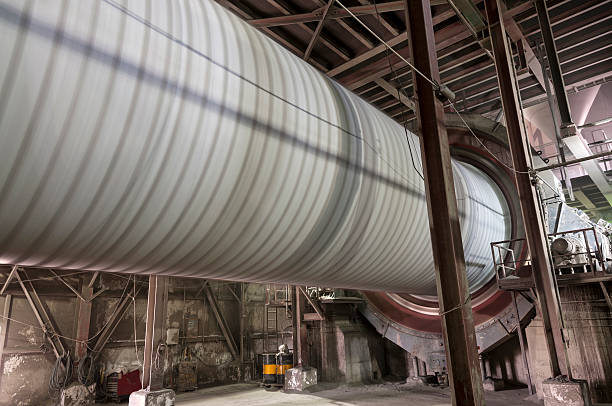
I didn’t really think much about something like a cement plant kiln seal before, sounds kinda boring honestly. But once you start digging into how a cement plant actually runs, you realize these tiny components are doing a lot of heavy lifting. Like seriously. The whole system kinda depends on things sealing properly, and if the cement plant kiln seal isn’t doing its job right, the whole process gets messy… and expensive too.
Think of it like trying to cook on a gas stove with a leak. Even if the flame is on, you’re wasting fuel, losing efficiency, and maybe even creating danger. Same thing here, just bigger scale, like way bigger.
What’s really going on inside the kiln
So the kiln in a cement plant is basically this long rotating cylinder where raw materials get heated at crazy high temperatures. We’re talking around 1400°C sometimes. And to keep that environment stable, you need proper sealing on both ends. Otherwise cold air sneaks in, hot gases escape, and the temperature balance gets messed up.
I saw a discussion on LinkedIn once (yeah, random but useful) where someone mentioned that even a small air leakage can increase fuel consumption by 3–5%. That sounds small, but when a plant is burning tons of fuel daily, that’s actually a big dent in cost. Like imagine leaking money slowly every hour.
And the funny thing is, a lot of plant operators don’t even notice it immediately. It’s not like a machine stops suddenly. It’s more like performance drops slowly, kind of like your phone battery getting worse over time. You just feel something’s off but can’t pinpoint it.
Why people underestimate it (I kinda did too)
Honestly, before reading more about this, I thought kiln seals were just like basic rubber or metal parts that you replace once in a while. But nope. They’re designed to handle extreme conditions, heat, dust, rotation, and still maintain tight sealing.
There’s also this thing where plants delay maintenance because everything “looks fine”. I’ve heard operators say stuff like, “haan chal raha hai, why change it now.” But that’s exactly where losses creep in. It’s like ignoring a small crack in your bike tyre, works fine until one day it doesn’t.
And once the kiln loses efficiency, it’s not just fuel cost. It affects clinker quality too. Which then impacts the final cement strength. So yeah, one small seal can kinda mess with the whole chain.
A small real-life moment that stuck with me
A friend of mine was working in an industrial setup, not exactly cement but similar heavy process. He told me they ignored a sealing issue for weeks because production targets were high. Eventually, they had to shut down for emergency repair, and the downtime cost was more than what regular maintenance would’ve been for months.
That story stuck. Because it’s such a common pattern. Short-term thinking wins, long-term loss follows.
Online chatter is actually interesting here
If you check forums or even YouTube comments under cement plant videos (yes people actually comment there lol), you’ll see operators talking about air leakage, dust problems, and how seals wear out faster than expected.
Some even say modern designs are better but installation matters more. Like even the best seal won’t work properly if it’s not fitted right. That’s something people don’t talk about enough.
Also there’s a bit of debate going on about flexible vs rigid seals. Some swear by flexible ones because they adjust better with kiln seals movement. Others say rigid ones last longer. Honestly, I think it depends on the plant conditions. No one-size-fits-all here.
The cost side of things (this part hurts a bit)
Let’s talk money, because at the end that’s what matters to most plant owners. A poorly working seal increases fuel usage, increases wear on other components, and can even lead to unplanned shutdowns.
I read somewhere that energy cost is like 30–40% of total production cost in cement manufacturing. So even a small efficiency drop is not “small” anymore.
It’s kinda like leaving your AC on all day with doors open. You’re still cooling the room, but paying way more than needed.
And here’s the thing, upgrading or maintaining a good sealing system isn’t even the most expensive part of the plant. It’s actually one of those “low investment, high impact” areas. But still gets ignored sometimes.
Where people usually go wrong
One mistake I keep seeing (and hearing) is that plants only react when there’s visible damage. Like when dust leakage becomes obvious or when temperature readings go weird.
But by that time, losses have already been happening for weeks or months.
Another issue is using generic solutions instead of something designed for specific kiln conditions. Every plant has different alignment, rotation speed, and thermal expansion behavior. So copying what worked somewhere else doesn’t always work.
Why paying attention here just makes sense
At the end of the day, cement manufacturing is all about efficiency. Margins aren’t huge, competition is high, and energy costs keep rising. So anything that improves efficiency even by a few percent is worth looking at.
And kiln seals are one of those things that quietly affect everything without getting much attention.
If someone had told me earlier that something this “small” could impact fuel, quality, and maintenance all together, I probably wouldn’t have believed it. But yeah, after reading and hearing from people in the field, it kinda makes sense now.
Also, weirdly enough, once you start noticing these small components, you realize how many such “invisible heroes” exist in industrial setups. Not flashy, not talked about much, but doing critical work every single day.
Anyway, next time someone mentions kiln efficiency, I won’t just think about temperature or fuel. I’ll probably think about seals first… funny how that works.