
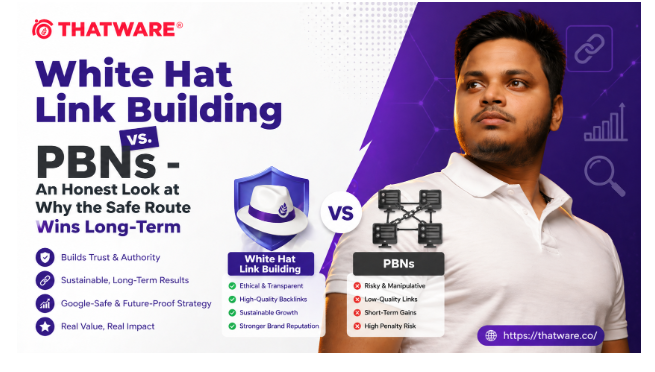
The private blog network debate has been running for over a decade. PBN advocates argue that the risk is manageable, the results are faster, and the links are indistinguishable from legitimate ones when done carefully. White hat advocates argue that PBNs are a ticking clock – not a matter of if they’ll be penalized but when. Both arguments are partially right.
The more interesting question isn’t which is “better” in the abstract. It’s which one produces better outcomes for businesses operating over a realistic time horizon – which, for most brands investing in SEO, is more than eighteen months.
What PBNs Actually Deliver (The Honest Version)
PBNs deliver links, and links move rankings. That part of the argument is accurate. A well-constructed PBN with varied hosting, genuine content, and careful footprint management can produce ranking improvements that look like legitimate organic gains in the short term. For businesses with short time horizons – say, an affiliate site or a product launch that needs rankings fast and doesn’t need to be a going concern in three years – PBNs have a rational use case.
The timeline limitation is real, though. Google’s ability to detect unnatural link patterns has improved significantly, and continues to improve. Link patterns that looked safe in 2018 are detectable in 2026. Patterns that look safe today are likely to be detectable in 2028. Investing in link infrastructure that will be devalued or penalized in the future is investing in a depreciating asset.
What White Hat Link Building Actually Requires
White hat link building is slower, harder, and more expensive per link than PBNs. It requires producing genuinely linkable content, building real relationships with publishers and journalists, executing outreach that earns rather than purchases placement, and often creating the kind of original research or tools that attract links organically over time. None of that is fast or cheap.
The value of the links produced, however, compounds rather than depreciates. An editorial link from a legitimate publication, earned through genuine content or outreach, tends to maintain or increase its value over time as the linking domain ages and the relationship with the publisher deepens. It doesn’t disappear in a manual action.
The Risk Calculation That PBN Advocates Underweight
When a PBN is penalized – and the question really is when, not if – the impact isn’t just losing the links. It’s potentially receiving a manual action that affects the entire domain, requiring a reconsideration request, and spending months recovering authority that took years to build. The opportunity cost of a penalty recovery period is enormous for businesses that depend on organic search.
Link building services built on white hat methodology produce links that don’t carry this tail risk. The worst case for a legitimate link is that the linking page loses authority or the link is lost when the page is updated. That’s a gradual, manageable decline rather than a cliff.
The Real Competitive Dynamics in High-Stakes Categories
In the most competitive categories – finance, legal, health, insurance – white hat link building is essentially the only path that works over a multi-year horizon. Google’s manual review teams focus disproportionately on YMYL categories, which means PBN detection rates are higher and manual action rates are higher. The brands that have built lasting organic search leadership in these categories have done it through genuine authority – real links from real sources earned through real relationships.
The brands that tried to shortcut through PBNs in these categories have mostly been set back significantly by penalty events that took them months or years to recover from.
What the Long Game Actually Looks Like
White hat link building over 24-36 months produces a link profile that looks like what it is: a brand that has been doing interesting, credible work and earning coverage for it over time. That profile is more resilient to algorithm updates than a link profile that looks engineered – because it wasn’t engineered. It was earned.
The slow path, frustratingly, is usually the fast path to durable rankings. The brands that understand that and invest accordingly tend to be the ones still ranking well five years later.